






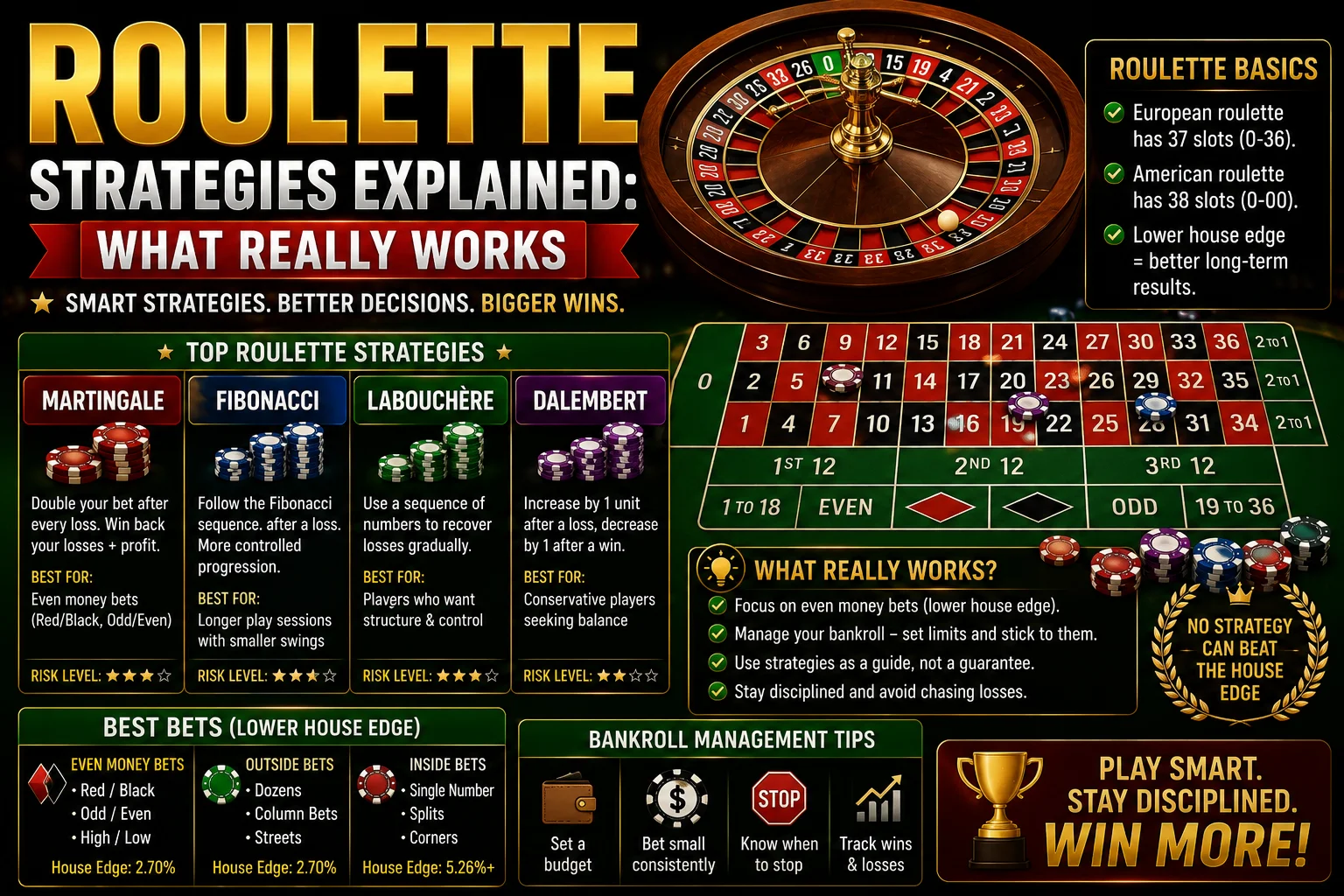
Roulette Strategies Explained What Really Works
 Roulette Strategy Guide: What Popular Betting Systems Actually Do
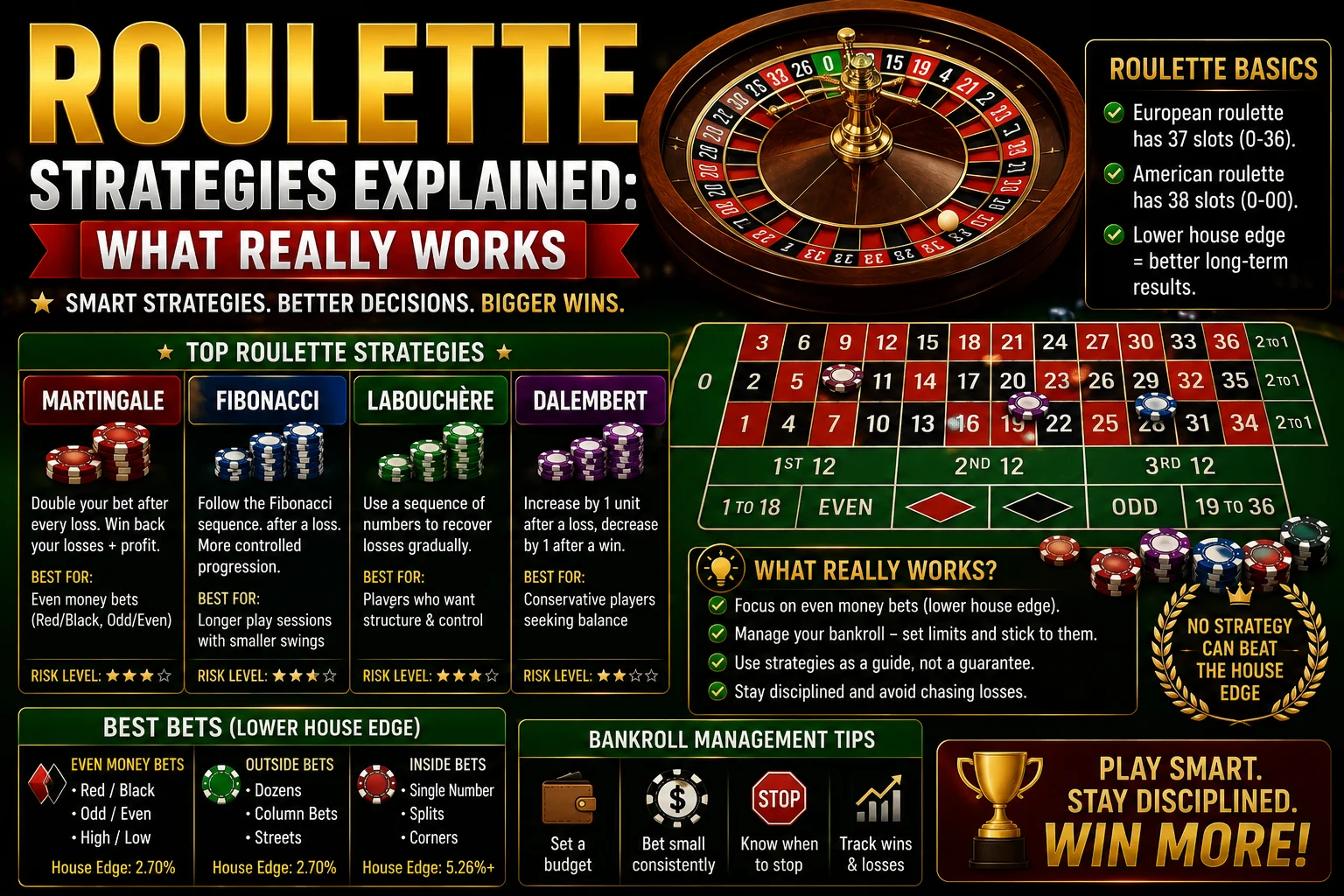 Roulette Strategy Guide: What Popular Betting Systems Actually Do
Roulette is one of the oldest and most iconic casino games in the world, and it has inspired countless betting systems over the centuries, each promising a smarter way to play. Before exploring these strategies, it’s important to set realistic expectations: roulette is a game of independent random outcomes, and no betting system can change the built-in house edge. This guide explains the most well-known roulette strategies, how they work, and why understanding the math behind them matters more than chasing a “guaranteed” system reddy anna guru
Understanding the Fundamentals of Roulette
Before diving into betting strategies, it’s essential to understand how roulette actually works, since this context explains why no system can overcome the game’s underlying mathematics.
European vs. American Roulette
The two most common roulette variants are European roulette, which has a single zero pocket, and American roulette, which has both a single zero and a double zero. This extra pocket in American roulette increases the house edge from approximately 2.7% to approximately 5.26%, making European roulette the mathematically better choice for players whenever it’s available.
Why Every Spin Is Independent
Each spin of a roulette wheel is a completely independent event, meaning the outcome of any previous spin has no influence on the next one. This is a critical concept, because many popular betting systems are built on the false assumption that outcomes will “even out” over time or that a color or number is “due” after a streak — a misconception known as the gambler’s fallacy. reddy anna guru login
Popular Roulette Betting Systems Explained
While no system beats the house edge, understanding how these strategies work can help you make more informed decisions about your own approach to the game.
The Martingale System
The Martingale system is perhaps the most famous roulette strategy, built around doubling your bet after every loss on an even-money bet (such as red/black or odd/even), with the idea that a single win eventually recovers all previous losses plus a small profit. While this can work over short sessions, it carries serious risk: a long losing streak can require exponentially larger bets, quickly hitting table limits or exhausting a player’s bankroll before a win occurs.
The Reverse Martingale (Paroli System)
The Reverse Martingale flips the logic of the original system, increasing your bet after a win rather than a loss, with the goal of capitalizing on winning streaks while limiting losses during cold periods. This approach reduces the risk of catastrophic losses compared to the standard Martingale, though it still cannot change the underlying odds of each spin.
The D’Alembert System
The D’Alembert system uses a more gradual approach, increasing your bet by one unit after a loss and decreasing it by one unit after a win. This creates a smoother, less volatile betting pattern compared to Martingale, though it also means recovering losses typically takes much longer, if it happens at all within a session. reddy anna guru deposit
The Fibonacci System
The Fibonacci system uses the famous mathematical sequence (1, 1, 2, 3, 5, 8, 13, and so on) to determine bet sizes, increasing your bet according to the sequence after a loss and moving back two steps after a win. Like other progressive systems, it aims to manage losses gradually rather than promising guaranteed recovery.
The James Bond Strategy
This flat-betting system spreads a fixed amount across multiple outside bets in an attempt to cover a large portion of the wheel in a single spin. While it can create the appearance of frequent small wins, it doesn’t reduce the house edge — it simply redistributes the same underlying odds across multiple bet types.
Why No Betting System Beats the House Edge
It’s worth repeating clearly: every betting system discussed above is a money management approach, not a way to alter the actual probability of winning any individual spin. The house edge is built into the payout structure of the game itself — for example, a single number bet in European roulette pays 35:1, even though the true odds against winning are 36:1. This built-in gap is what generates the house edge, and no sequence of bet sizes can eliminate it. reddy anna guru master id
Table Limits and Bankroll Reality
Progressive systems like Martingale rely on the assumption that a player can always double their bet indefinitely to recover losses. In reality, table maximum limits and finite bankrolls mean that a sufficiently long losing streak can make recovery mathematically impossible within a single session, regardless of how the system is designed.
Practical Tips for Playing Roulette Smarter
While no strategy can guarantee winning, there are practical approaches that can help you manage your experience more effectively:
Choose European or French roulette when available — The lower house edge compared to American roulette gives you better long-term odds
Understand the “La Partage” and “En Prison” rules — Some European and French roulette variants return half your bet (or place it “in prison” for another spin) if the ball lands on zero for even-money bets, further reducing the house edge reddy anna guru india
Set a strict budget before playing — Decide how much you’re willing to spend as entertainment and stick to that limit regardless of how a session unfolds
Avoid chasing losses — Trying to win back losses by increasing bets impulsively is one of the most common ways players end up losing more than intended
Treat any system as a betting pattern, not a guarantee — Approaching these strategies as a way to structure your entertainment budget, rather than a path to consistent profit, leads to healthier expectations
The Role of Randomness and Why It Matters
Understanding true randomness is key to playing roulette with realistic expectations. Because each spin is independent, patterns like “hot” or “cold” numbers are statistical illusions rather than predictive signals. Casinos rely on this misunderstanding, since players who believe in patterns are more likely to increase their bets based on false confidence rather than sound reasoning.
Responsible Play Comes First
Roulette, like all casino games, should be approached as a form of entertainment rather than a source of income. No betting system — regardless of how mathematically elegant it appears — can overcome the house edge over a large enough number of spins. If you choose to play, setting firm budget limits, understanding the true odds, and treating losses as the cost of entertainment are the healthiest ways to engage with the game. Most licensed platforms and casinos offer tools such as deposit limits, session reminders, and self-exclusion options for players who want additional support reddy guru reg
Final Thoughts
While countless roulette betting systems have been developed over the years — from Martingale to Fibonacci to the James Bond strategy — none of them change the fundamental math of the game. Understanding how these systems work can help you make more informed decisions about bankroll management and risk tolerance, but the honest reality is that roulette remains a game of chance with a fixed house edge. The most effective “strategy” is choosing favorable game variants, understanding the true odds, setting firm limits, and playing purely for entertainment. reddy anna whatapp number
FAQ Section
1. Is there a roulette strategy that guarantees winning?
No. Roulette outcomes are independent random events, and no betting system can eliminate the built-in house edge over time.
2. What is the Martingale system?
The Martingale system involves doubling your bet after every loss on an even-money bet, aiming to recover losses with a single win, though it carries significant bankroll risk during long losing streaks. reddy anna how to create id
3. Is European roulette better than American roulette?
Yes, European roulette has a single zero pocket and a lower house edge (about 2.7%) compared to American roulette’s double zero and higher house edge (about 5.26%).
4. What is the gambler’s fallacy in roulette?
It’s the mistaken belief that past spins influence future outcomes, such as assuming a color is “due” after a losing streak, when in reality each spin is statistically independent. reddy anna how to play in
5. Does the Fibonacci system work in roulette?
The Fibonacci system is a structured way to manage bet sizes after wins and losses, but like all betting systems, it cannot change the underlying odds or guarantee recovery of losses.
6. What does “La Partage” mean in roulette?
La Partage is a rule found in some European and French roulette variants that returns half of an even-money bet if the ball lands on zero, slightly reducing the house edge. reddy anna master id
7. What’s the safest way to approach roulette?
Setting a strict budget, choosing lower house-edge variants like European roulette, and treating the game purely as entertainment are the most responsible ways to play.
Comments are closed